

He wasn’t the golden boy plastered on billboards. He didn’t score hat-tricks for headlines or dance through defenses like a magician. Yet, ask any coach who ever coached him, any teammate who ever played beside him, and they’ll tell you: football isn’t the same without Ángel Fabián Di María. His is not a story of trophies alone, but of quiet revolutions—of a player who turned ordinary moments into legends, often unseen.
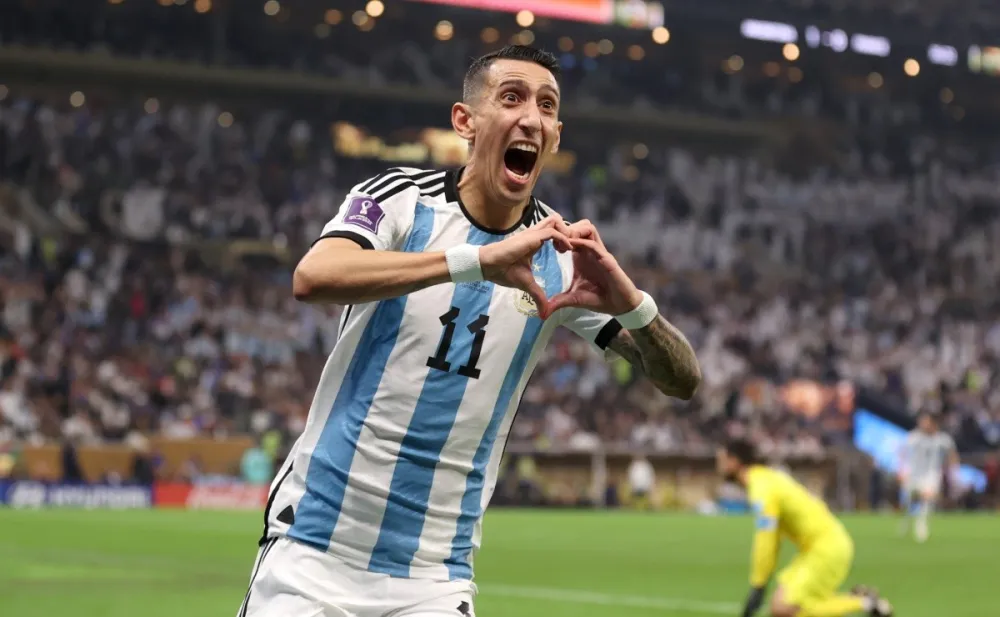
The Humble Beginning: From Rosario’s Dust to Lisbon’s Lights
Born in the working-class neighborhood of Perdriel in Rosario, Argentina, Di María’s first ball was a bundle of rags tied with string. His talent was raw, explosive, and undeniable. At 17, he left home for Benfica—a leap of faith across oceans. In Portugal, he honed his craft not as a star, but as a ghost: darting through midfields, threading impossible passes, and scoring with a left foot that seemed guided by instinct. Benfica saw a diamond in the rough; Real Madrid bought it for €33 million in 2010.
Madrid: The Agony of Applause and Hate
At Real Madrid, Di María became the engine of a galactic machine. He won La Liga, Copa del Rey, and the Champions League in his debut season—scoring the winning goal in extra time against Atlético Madrid in the 2014 final. Yet, fame brought cruelty. Critics called him “lazy.” Fans booed him for celebrating Argentina’s Copa América win near Madridistas. When he scored against Barcelona at Camp Nou, the stadium erupted… in jeers. In 2014, as Argentina reached the World Cup final, he limped off injured. Minutes later, Germany scored the winner. Social media burned with accusations: “Selfish,” “Quit on his country.” The truth? A thigh tear nearly ended his career. Madrid sold him weeks later—for €75 million.
Paris: Glory, Ghosts, and a Second Chance
In Paris, Di María found redemption. Under Laurent Blanc and Unai Emery, he flourished. He scored screamers against Barcelona, danced past defenders, and lifted France’s first-ever Champions League trophy in 2020. But shadows lingered. Injuries plagued him. Critics questioned his work ethic again. Then came 2022—his masterpiece. Against Manchester City in the Champions League semifinals, he carved up the defense with three assists. Against Liverpool in the final, he ran 13 kilometers—more than any player on the pitch—to anchor Argentina’s third crown. In Qatar, he was the heartbeat of a nation’s third World Cup triumph.
Juventus, Turin, and the Return Home
A brief, turbulent spell at Juventus followed—injuries, inconsistent form, whispers of decline. But in 2023, Di María returned to Rosario Central. Not as a superstar, but as a son coming home. At the Estadio Gigante de Arroyito, fans wept as he kissed the badge. He played not for glory, but for the joy of kids who once kicked rag balls in Perdriel. “This,” he said, “is where my heart always was.”
The Unseen Angel
Ángel Di María never needed a spotlight. He was the player who made others shine brighter. A winger with a midfielder’s brain, a finisher with a playmaker’s heart. In an era obsessed with viral skills, he reminded us that greatness lives in the unsung pass, the tireless run, the loyalty to a crest. As he hangs up his boots, remember this: behind every Messi assist, every Ronaldo goal, every Albiceleste triumph—there was often an angel named Ángel, flying silently in the background.
Comment List (0):
Load More Comments Loading...